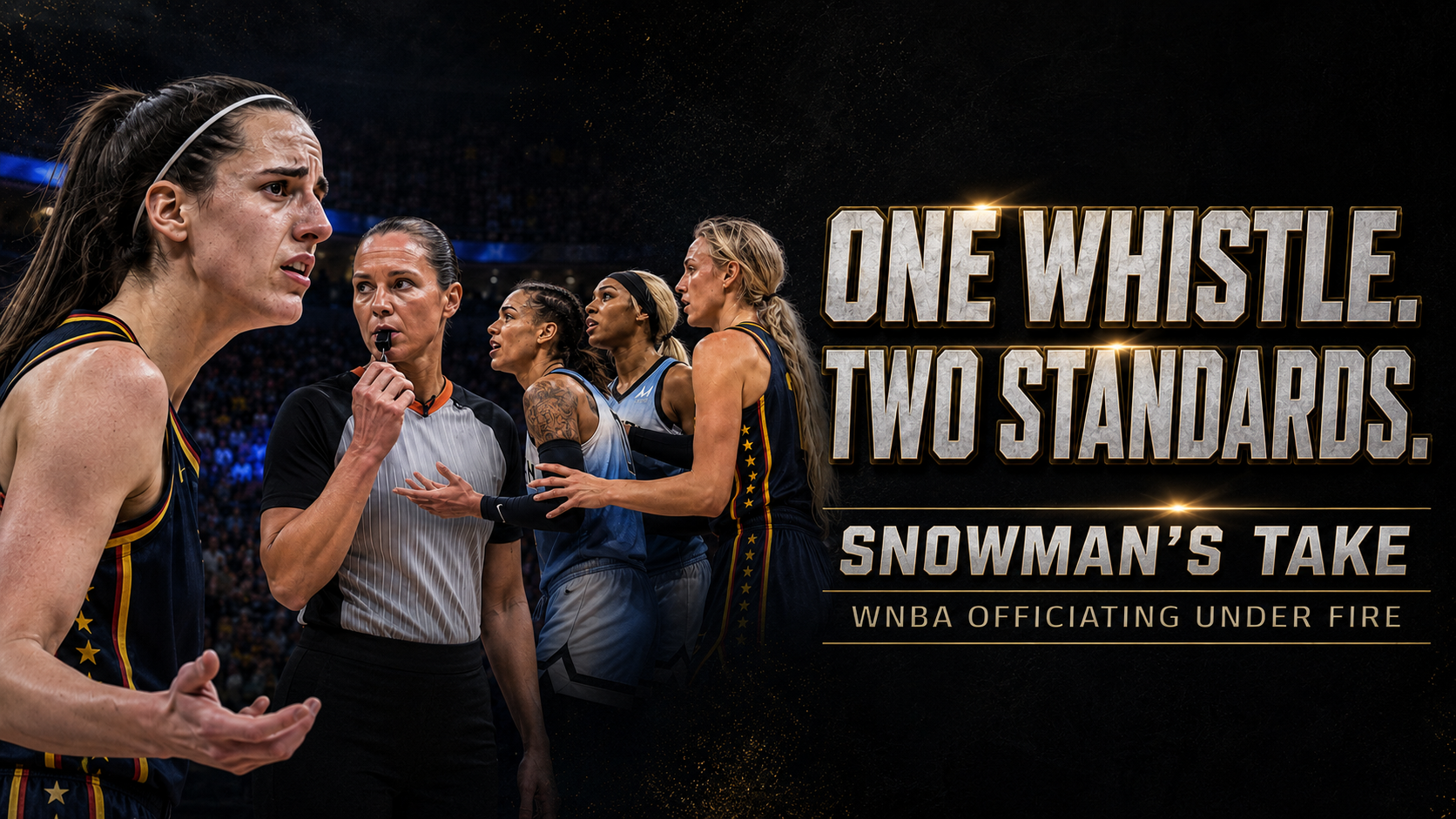
One Whistle, Two Standards: Why I Stepped Away from Calling WNBA Games
My wife gave me a rule.
No swearing on the air. No swearing in my writing.
I came doggone close to breaking that rule this weekend.
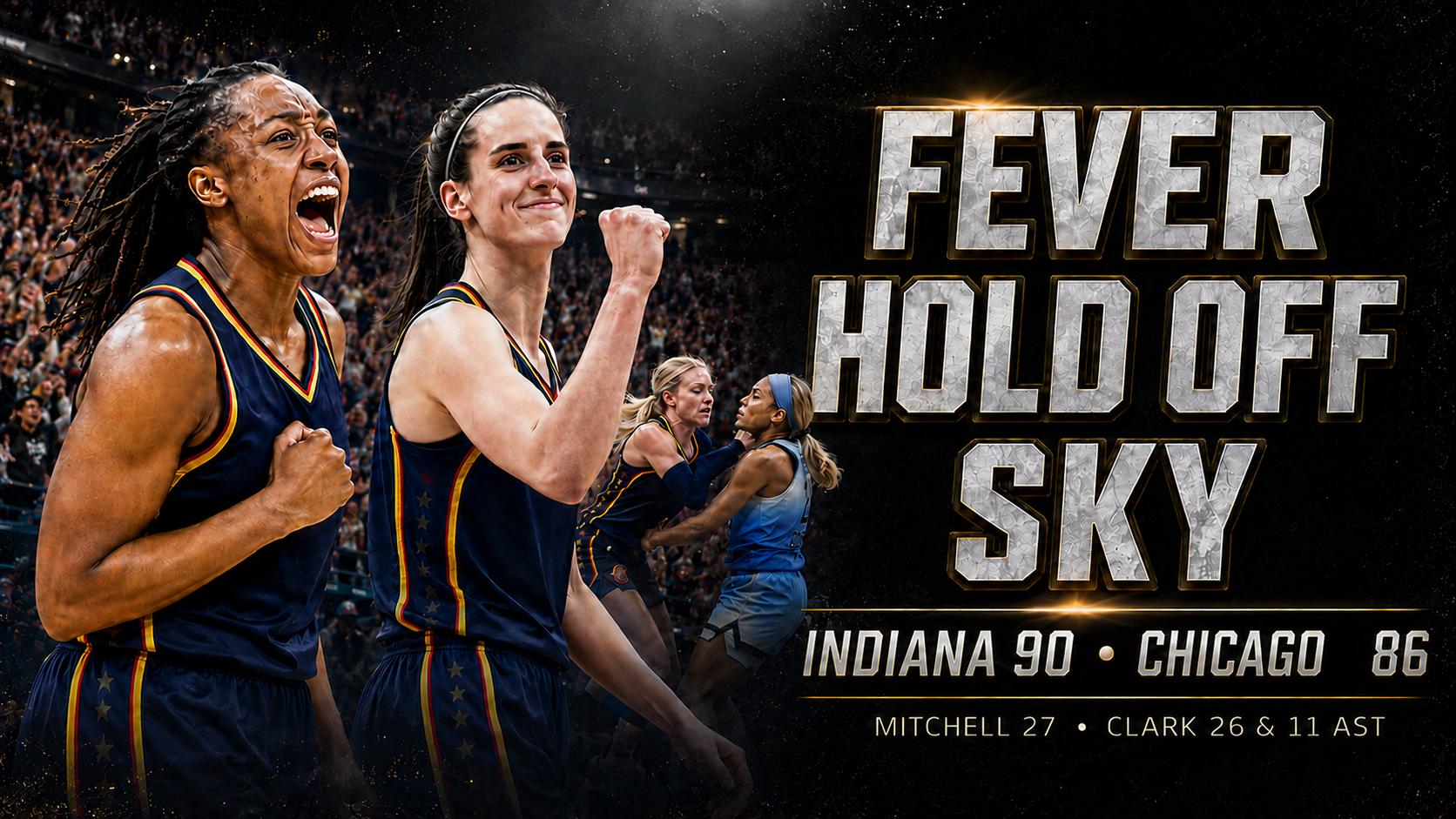
What happened during the Indiana Fever’s 90-86 victory over the Chicago Sky was bigger than one missed call, one technical foul or one heated moment. It exposed the kind of inconsistency that has damaged my trust in WNBA officiating and contributed to my decision to step away from calling the league’s games.
Let us begin with DiJonai Carrington’s hit on Sophie Cunningham.
Cunningham was attempting a fast-break layup when Carrington struck her in the head and face. Officials reviewed the play, assessed Carrington a Flagrant 2 foul and ejected her.
That was the correct decision.
Carrington later posted “WHITE PRIVILEGE @indianafever” on social media. Cunningham rejected that accusation and pointed out that she had previously been ejected for a similar play.
Accountability cannot depend on which player committed the foul, what color she is, which team she represents or which side of the WNBA culture war has claimed her.
A dangerous play is a dangerous play.
Then Came the Clark Technical
Later in the game, Caitlin Clark was bumped while attempting to keep the basketball in play near the sideline. Natasha Cloud made contact with Clark, Clark lost control of her momentum, and Clark subsequently collided with an official.
No foul was called against Cloud.
Several seconds later, the official assessed Clark a technical foul for what was initially judged to be intentional contact.
It would have been Clark’s eighth technical foul of the season, triggering an automatic one-game suspension.
The league reviewed the footage after the game and rescinded the technical. Clark remained eligible to play against the New York Liberty.
That reversal confirmed what the replay already suggested: Clark’s contact with the official should never have been judged in isolation from the contact that sent her out of control.
The WNBA eventually corrected the ruling.
That does not erase the original failure.
One Official, Two Standards
Then came the moment that nearly sent me over the edge.
Later in the game, Cloud visibly placed her hands on that same official and moved her aside while attempting to communicate with someone else.
There was no technical foul.
I watched one player lose control after being bumped, make incidental contact with an official and receive a technical foul that threatened an automatic suspension.
I then watched another player deliberately place her hands on the same official and receive no technical foul at all.
One whistle.
Two standards.
How is a broadcaster supposed to explain that?
How is a fan supposed to trust that?
How is a player supposed to know where the boundary is when the boundary apparently moves according to the moment?
The Racial Dimension Cannot Be Ignored
Let me be responsible with my words.
I cannot prove what was in an official’s heart. I cannot declare that a particular whistle was motivated by race simply because the players involved were of different races.
But I will not insult anyone’s intelligence by pretending the racial overtones are not present.
Carrington publicly introduced race into the story by accusing the Fever of white privilege after her ejection. At the same time, viewers watched Clark receive immediate punishment for contact the league later determined should not have been a technical, while Cloud’s more deliberate hands-on contact with the same official went unpunished.
That does not prove racist intent.
It does create the appearance of unequal treatment. In a league already consumed by racial arguments surrounding Clark, the Fever and their opponents, appearances matter.
Transparency matters.
Consistency matters.
The WNBA cannot demand that fans ignore what they see and then act surprised when trust continues to erode.
Why I Stepped Away
This brings me back to my own decision.
I stepped away from calling WNBA games because I reached a point where the anger, controversy, inconsistent officiating, media narratives and identity battles were making it difficult for me to call the games objectively and fairly.
I love women’s basketball.
I respect the athletes.
I want the WNBA to grow, succeed and receive the serious coverage its players deserve.
But a professional does not fake neutrality.
A professional recognizes when anger has begun affecting judgment. A professional protects the microphone, the audience and the craft by stepping away instead of pretending everything is fine.
The microphone is my refuge, my weapon, my craft and my professional instrument. I will not use it carelessly.
Leaving WNBA play-by-play reduced my stress and protected my integrity. It was not abandonment of women’s basketball. It was an acknowledgment that I could no longer separate the basketball from everything surrounding it.
This weekend reminded me why.
What Must Change
If the WNBA wants skeptical fans and broadcasters to trust its product, the league must establish and enforce one standard.
Contact with an official must mean the same thing for every player.
Flagrant contact must mean the same thing regardless of who commits it.
Technical fouls must not depend upon reputation, emotion, identity or which controversy is trending that week.
Officials make mistakes. That is part of sports.
But when one player is threatened with suspension for incidental contact and another can visibly place her hands on the same official without consequence, the problem is no longer one missed whistle.
The problem is credibility.
Until the WNBA confronts that problem directly, I will remain where I am: supporting the game, respecting the athletes and refusing to pretend that what I witnessed was acceptable.
My wife’s rule survived the weekend.
Barely.